



01
Stand square to the camera
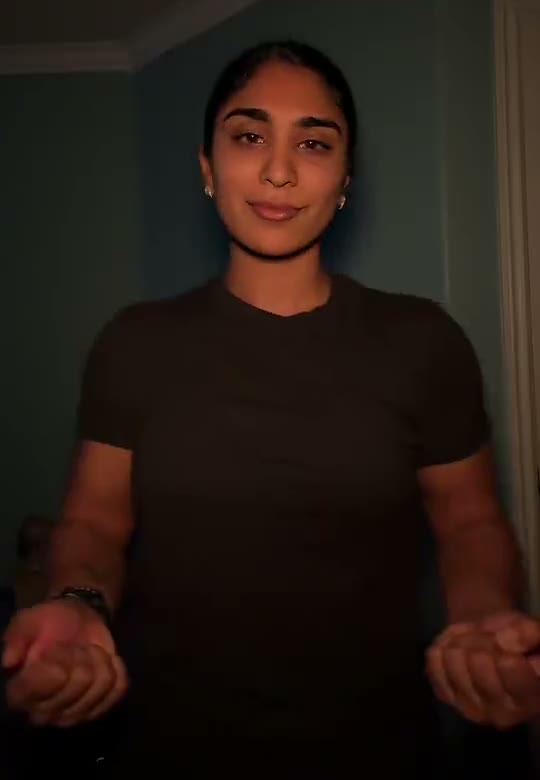
In the reference, the person faces forward with shoulders level and both arms down before starting the movement.
Upload one adult photo to create an approximately seven-second Bicep Heart video.
JPG, PNG or WebP · up to 5 MB each
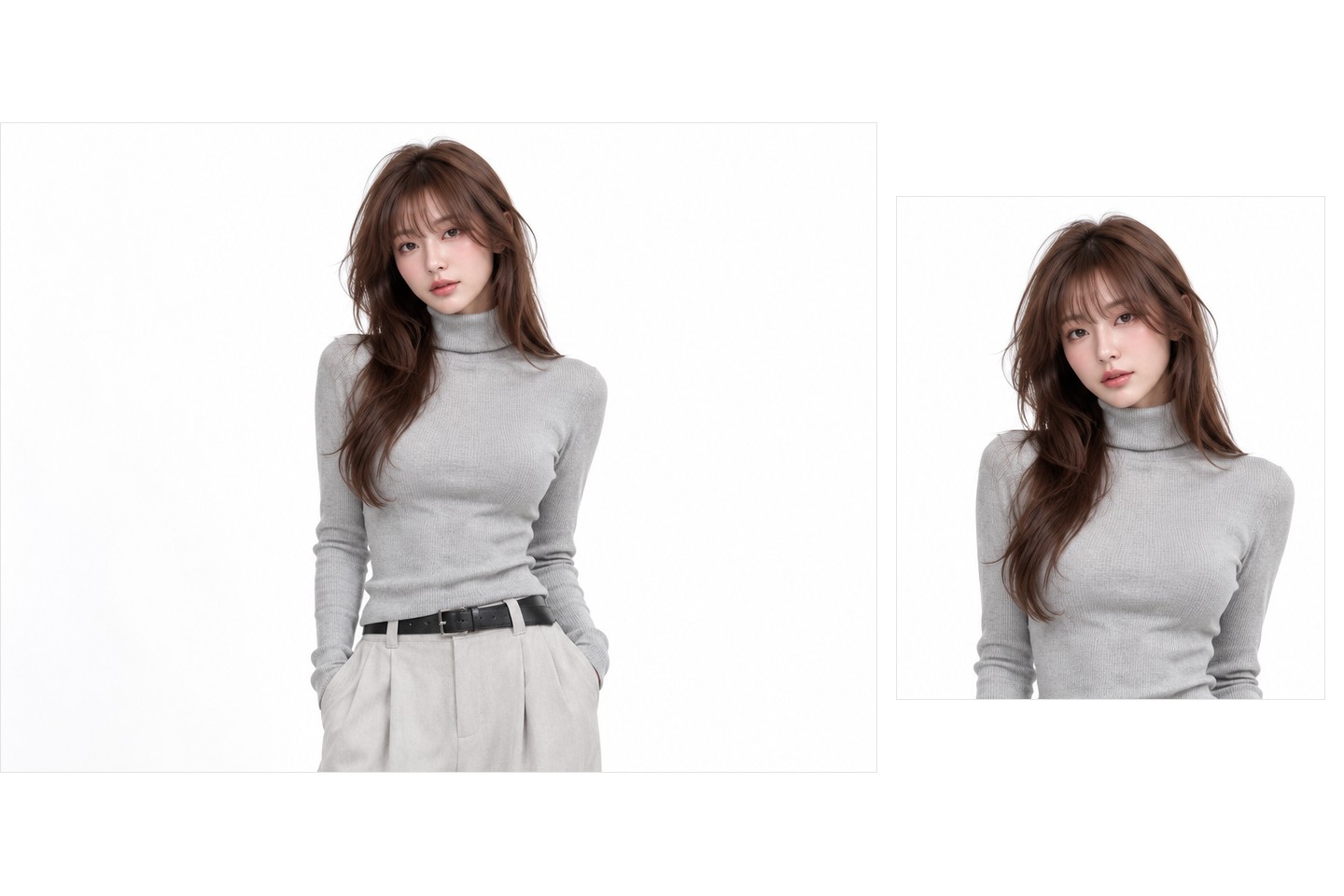
One adult, head to waist, both arms in frame
Credits are returned for confirmed generation failures.
Checking credits…
Checking your task…Your own photo, or an adult’s with permission. Privacy
Join creators making videos
In the reference, a person flexes one arm and brings the other hand over the bicep to form a heart. Watch the movement, then choose an adult photo with both arms in frame.
START WITH YOUR PHOTO
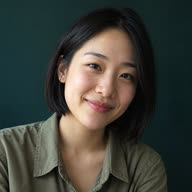
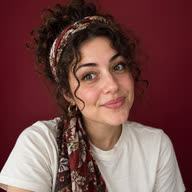
Choose a photo showing the shoulders, both upper arms and part of the forearms, with room around the body. A simple background and even light make the arm outline easier to see.
Choose a photo with space above the head and on both sides for the arms.
Short sleeves, a fitted long sleeve or a bare arm all read clearly because the outline of the arm stays separate from the body. A heavy jacket or an oversized top can swallow the elbow and make the flex look like a shrug. The reference wears a plain dark tee against a plain wall, which is about as legible as this pose gets.
Choose a photo where the arms stand out clearly from the background, and avoid strong backlighting.
WATCH THE DETAILS
In the reference, the person faces forward with shoulders level and both arms down before starting the movement.
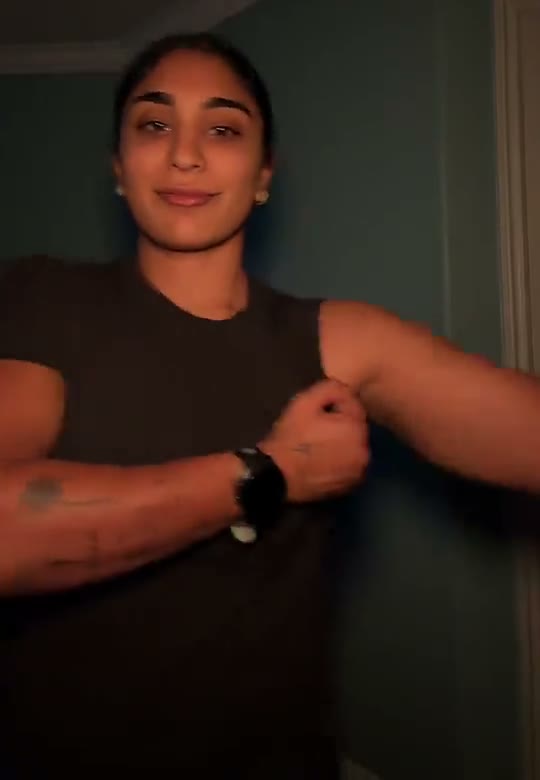
The flexing arm lifts until the forearm is close to vertical and the bicep is at its highest point. At the same time the other arm travels across the chest toward it, elbow leading.
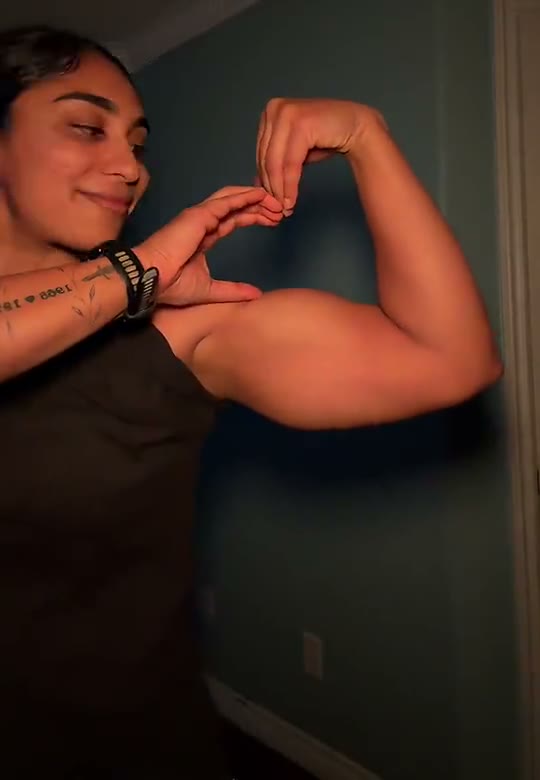
A thumb and a fingertip meet above the bicep and the heart closes. The pose is held to the last frame, with a small smile to camera rather than a big finish.
THE IDEA
The joke works because two things that do not normally belong together arrive in the same gesture. A flex is a boast; the shape it closes into is a heart. The seven-second length is doing real work too: long enough for the arm to travel, short enough that the punchline lands before anyone wonders what else is going to happen. Watching the reference once will tell you more than reading about the timing.
That structure tells you what to bring. A photo with a strong silhouette and one clear arm reads best because the movement is the whole content of the clip. Photographs with groups, pets in the background or busy signage compete with the gesture. If your idea needs a caption to explain it, the pose is probably carrying too little, so simplify the frame instead of adding text.
YOUR WORKFLOW
Play the reference once from beginning to end, then once again watching only the arms. Notice where the elbow sits at the top of the movement and how far the crossing hand travels; that is the area your photo has to cover. Upload the picture, look at the thumbnail rather than the filename, and confirm both arms are actually inside it before starting.
Choose a resolution and check the credit amount before generating. After your task is submitted, follow its progress in My creations; once it is ready, you can play and download your video there.
FRAMING
When cropping your finished video for a story or short, leave space around the head and arms so the movement remains visible. Keep the arms clear of interface elements.
If you share your video, choose a clear frame for the cover and keep captions away from the arms.
It is a short posing format: one person lifts an arm into a flex and brings the other hand over the top of the bicep until thumb and fingertip meet to complete a heart. The reference on this page shows the timing and the framing. Watch it once before choosing a photo.
Use one adult photo framed from the head to about the waist, with both arms visible. Leave space around the arms and choose even lighting and a simple background.
Yes. You can also choose a closer photo showing both arms and some space on either side.
Not automatically, but bulky clothing hides the elbow and can make the flex read as a shrug. Fitted or short sleeves keep the outline of the arm separate from the body, which is what makes the shape legible at a glance.
This template is designed for one adult photo.
The video is approximately seven seconds in a vertical frame. The current options are 480p for 70 credits or 720p for 140 credits. Check the creation panel for the quote before generating.
Check that both arms are visible and there is space around the shoulders and above the head. You can try a wider photo.
Other people, busy backgrounds, arms cropped by the edges of the frame, and steep angles from above or below. Each of those competes with a very simple movement. One person, one plain wall and one direction of light is the cleanest starting point.
YOUR NEXT IDEA
 Money Flex
Your pet or you, holding a fan of cash.
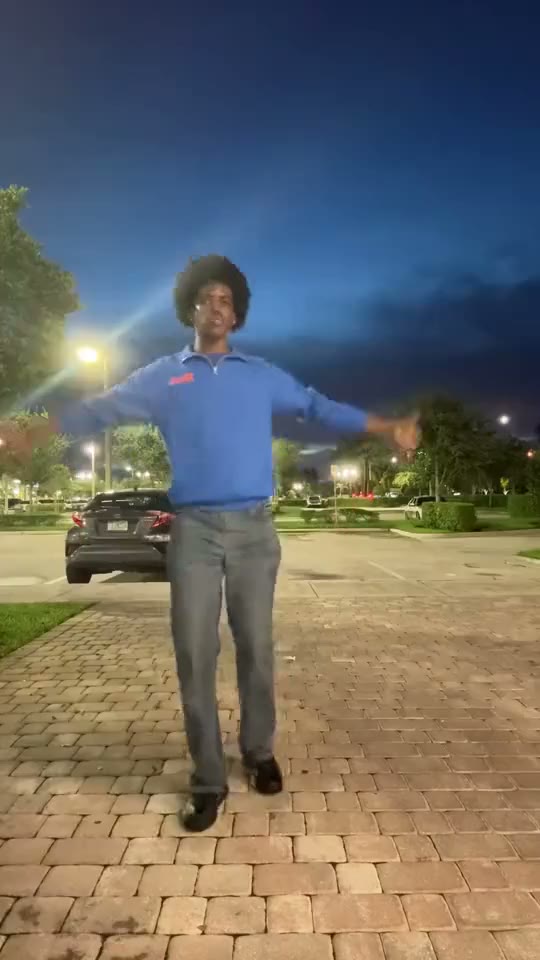 Pick It Up Make It Jump AI Dance
Use a clear full-body photo for a routine built around turns, low moves and a jump.
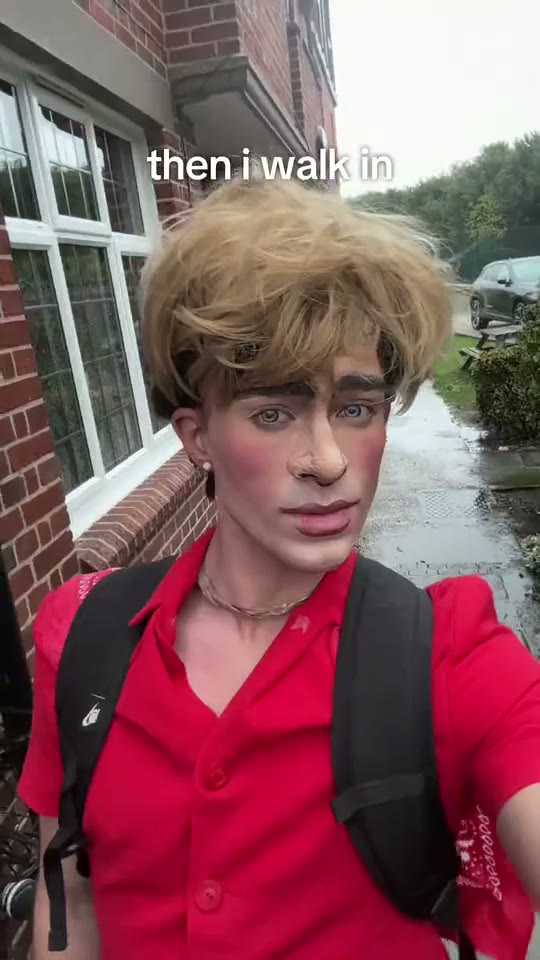 Then I Walk In AI Trend
Turn a clear portrait into a deadpan entrance with a simple walk-by setup.
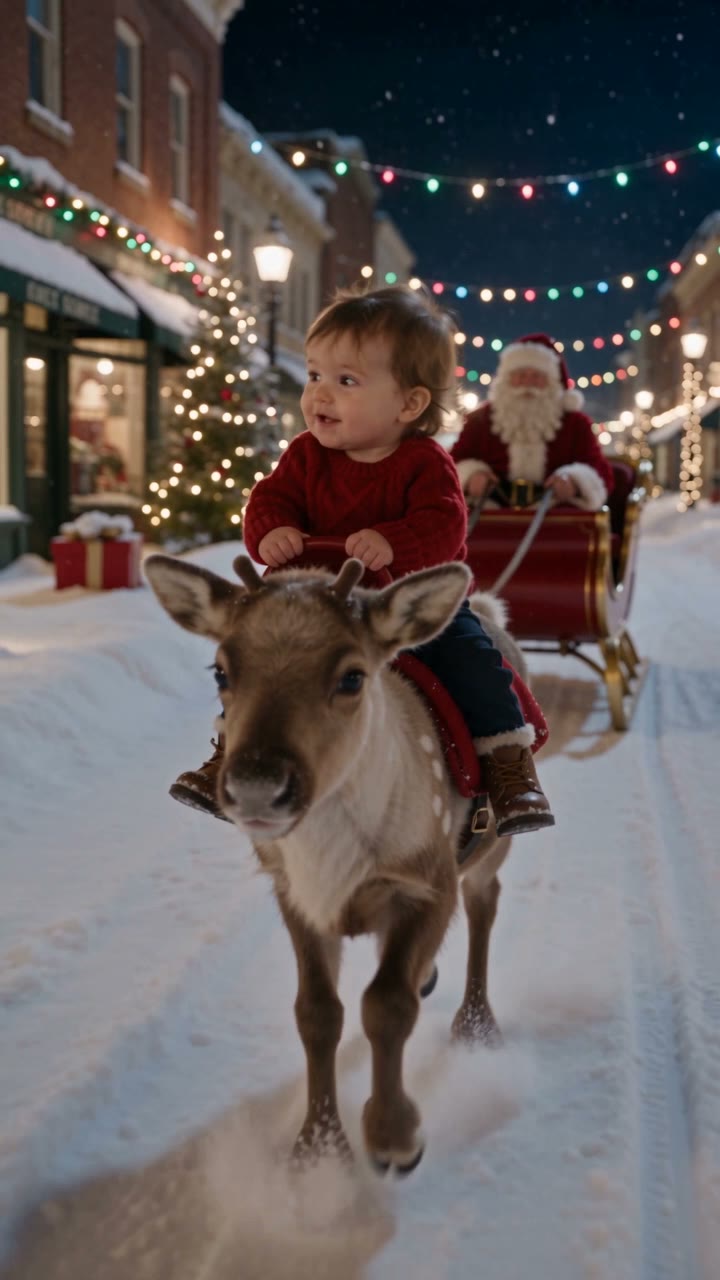 Baby Riding Reindeer AI Video
One photo of your child becomes eight seconds on a snow-covered street: a reindeer walks toward the camera, Santa follows in the sleigh.